

beginner electronicsWhat Is a Short Circuit? Simple Student Explanation
Learn what a short circuit is, why it causes too much current, and how to explain it safely with simple classroom circuit...
Teaching notes, project walkthroughs, and hands-on electronics guides from Gary and the Mr Circuit team.
Learn what a short circuit is, why it causes too much current, and how to explain it safely with simple classroom circuit...

Learn the difference between an open circuit and a closed circuit with simple examples, classroom language, and a quick troubleshooting checklist.

Build a simple burglar alarm circuit on a breadboard with a switch, transistor, buzzer, and battery using this safe classroom walkthrough.

Build a weekly STEM routine at home with short sessions, low-prep materials, reflection prompts, and simple electronics projects kids can repeat.

Learn what a 555 timer does, how RC timing changes its output, and how to explain monostable and astable modes to beginners.

Use this student-friendly circuit troubleshooting checklist to find open paths, wrong polarity, bad breadboard placement, and meter-ready mistakes.

Teach robotics with less confusion by covering the circuit ideas students need first: power, closed loops, polarity, sensors, motors, and troubleshooting.

Learn what a sensor does, how it turns physical changes into signals, and which simple sensor examples help STEM students understand robotics...

Learn what resistance means in a circuit, why resistors protect LEDs, and how to explain ohms to students with simple examples.

Build a simple night-light circuit on a breadboard with a photocell, LED, resistor, and transistor using this beginner-friendly classroom guide.

Teach series vs parallel circuits in one class period with simple definitions, prediction questions, a build routine, and common student mistakes.
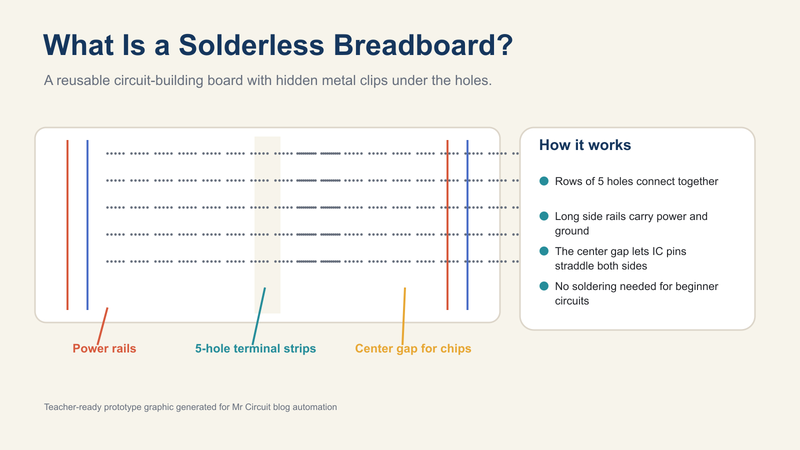
Learn what a solderless breadboard is, how its rows and power rails work, and how to teach beginners to build safe circuits...

Find out why LEDs need resistors, what happens without one, and how to explain current limiting in a simple student circuit.