

digital multimeterHow to Teach Students to Use a Digital Multimeter
Teach students to use a digital multimeter with a safe beginner routine for voltage, resistance, and continuity in STEM class.
Teaching notes, project walkthroughs, and hands-on electronics guides from Gary and the Mr Circuit team.
Teach students to use a digital multimeter with a safe beginner routine for voltage, resistance, and continuity in STEM class.

Plan a stronger middle school electricity unit by focusing on closed circuits, voltage, current, resistance, and evidence-based troubleshooting.

You do not need to be an engineer to teach beginner electronics. Use this simple classroom plan to start with safe builds,...

Teach robotics with less confusion by covering the circuit ideas students need first: power, closed loops, polarity, sensors, motors, and troubleshooting.

Learn what a sensor does, how it turns physical changes into signals, and which simple sensor examples help STEM students understand robotics...

Learn what resistance means in a circuit, why resistors protect LEDs, and how to explain ohms to students with simple examples.

Understand what current means in a circuit, how amps measure charge flow, and how to teach current with simple classroom examples.

Learn what voltage means in a circuit, why batteries create it, and how to explain voltage to students with simple classroom examples.

Build a simple night-light circuit on a breadboard with a photocell, LED, resistor, and transistor using this beginner-friendly classroom guide.

Teach series vs parallel circuits in one class period with simple definitions, prediction questions, a build routine, and common student mistakes.
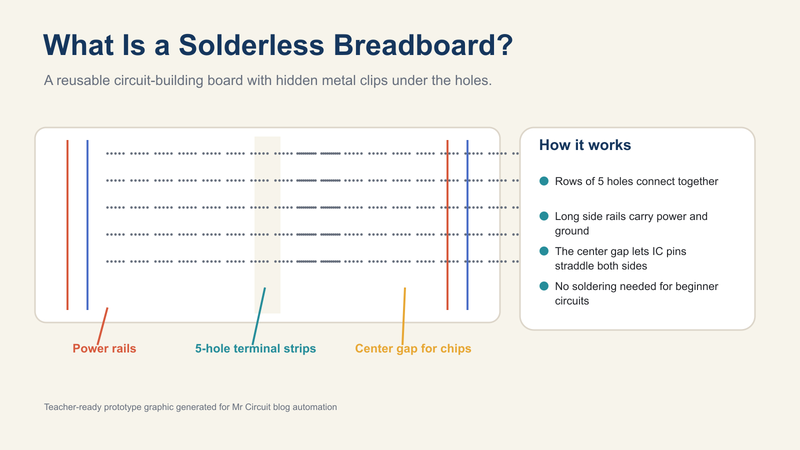
Learn what a solderless breadboard is, how its rows and power rails work, and how to teach beginners to build safe circuits...

Find out why LEDs need resistors, what happens without one, and how to explain current limiting in a simple student circuit.

See how a resistor controls current in a simple LED circuit, protects the LED, and gives teachers a clear beginner electronics example.